
Flickr: https://flic.kr/y/2vNM1ai
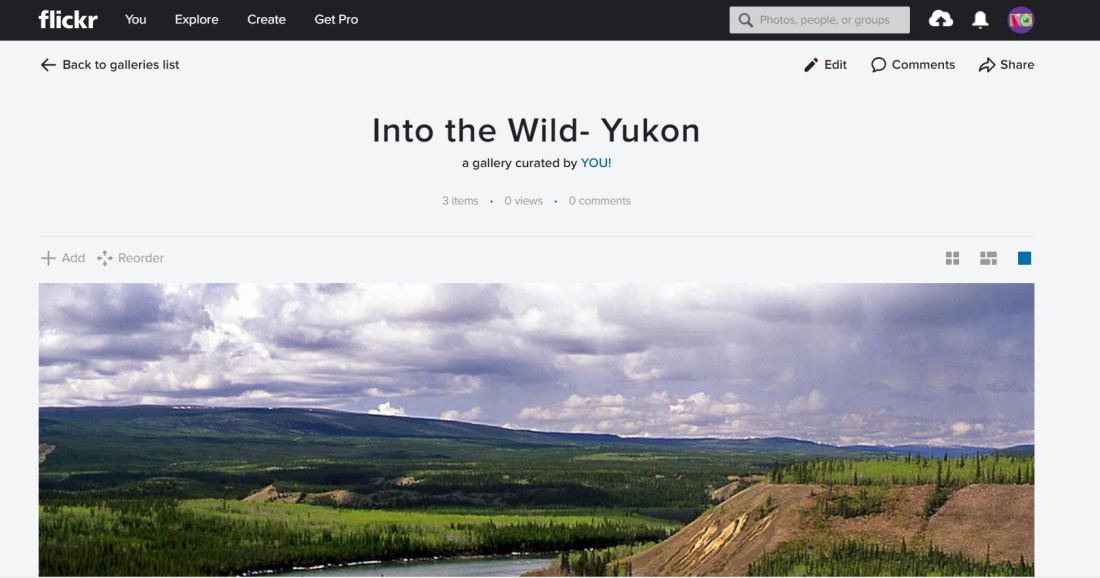
Flickr can be used for several levels of learning in Bloom’s Taxonomy. In my classroom, I used it in the analysis and evaluation level of Bloom’s. We’re currently reading Into the Wild in my junior English class. I asked students to analyze the photos of the Yukon, a prominent location of the main character, Chris. After they analyzed the photo, they then evaluated if they believe Chris could have survived there longer than he survived in Alaska, given the differences in the natural landscape and resources.
For the next part of the lesson, I had students see how long they could be quiet and reflect on the photos. Isolation is another key theme in the book—so silence is imperative. Students were silent for about the last 25 minutes of the bell and had very interesting exit tickets about the reflection. Flickr wasn’t as helpful for this portion of class, but did add another element. The experience itself would be in the Active part of Dale’s Cone of Experience. The photo analysis segment of class was in the passive/seeing part of Dale’s Cone.
Blendspace: https://www.tes.com/lessons/IWzR0sQ2197MMw/copy-of-what-current-events-can-teach-us-about-honesty
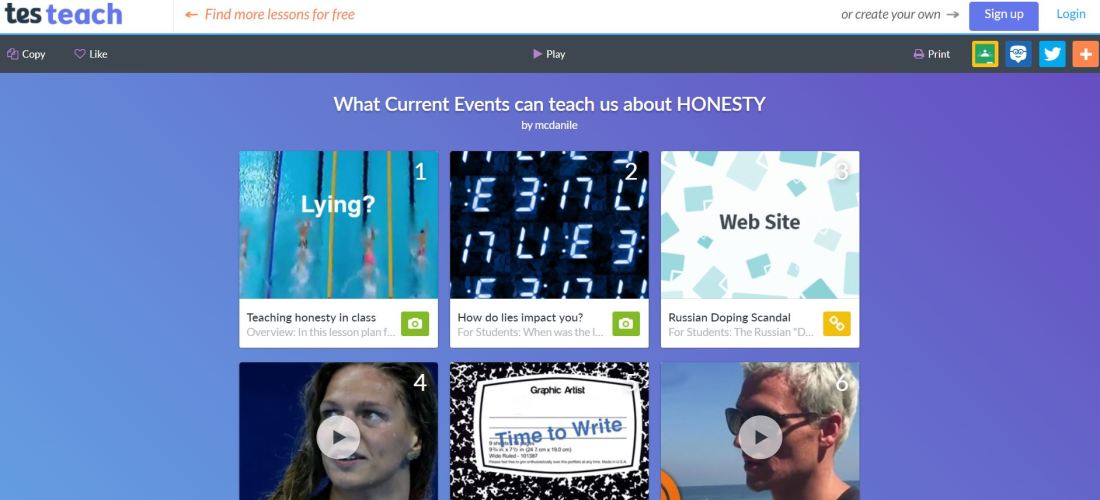
Blendspace is an interesting tool for combining several media sources for lessons. I found a great lesson that I copied and will likely use with my sophomore class about the role of the media in society and current events. The lesson as it stands is mostly in the analysis and evaluation stages of Bloom’s. It asks students to read and analyze elements of various articles and videos. It also asks them make judgements, such as “should Russian Olympian athletes have been banned from the Olympics?”
This unit is mostly in the passive part of Dale’s Cone of Experience. While they are interacting more with the various sources and videos, they aren’t actually experiencing anything or doing anything active with this particular unit. It would be interesting for them to create their own project—perhaps a Blendspace of their own that argues for a perspective demonstrated about a current event.
Storybird: https://storybird.com/bookshelf/picturebooks/
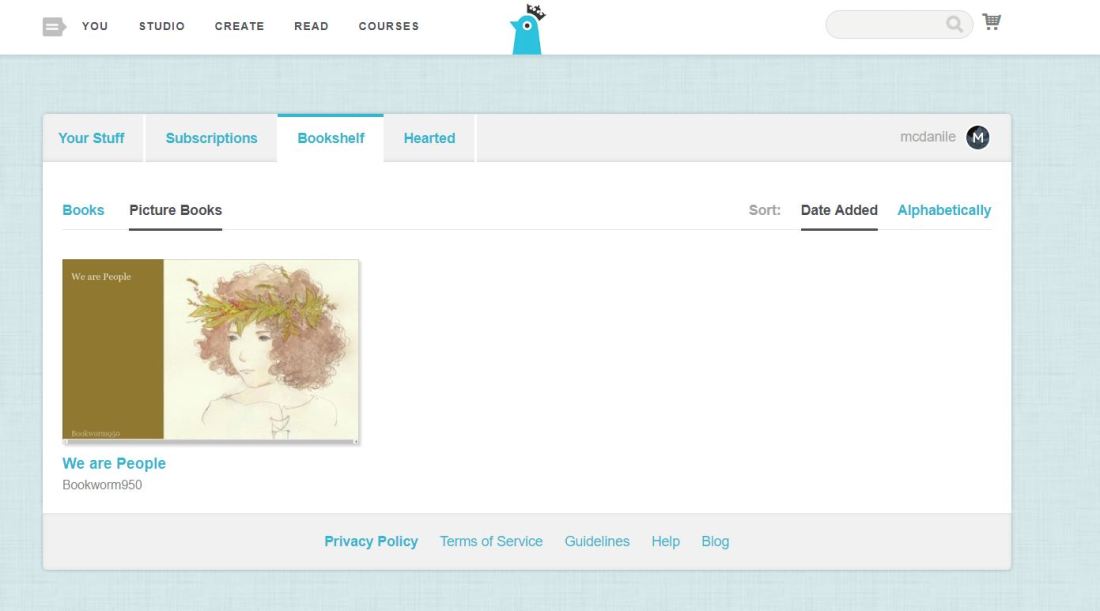
This interesting website works well for any classroom that asks students to create stories. Students can use artwork found on the site to illustrate their own stories or simply read the stories of others. In my class, I’d love to use this with my juniors during my “hero” unit. Students will create superhero characters for a local children’s physical therapy office. They will study the concept of heroism and the hero’s journey and eventually interview children with special needs who receive physical therapy at the office. Finally, they will create a superhero cape and a book that tells the story of the superhero created for a specific child. This will fall under the synthesis level of Bloom’s, as they must synthesize information from multiple sources to create their Storybird book.
Creating an Storybird book along with the superhero cape will definitely be in the Active level of Dale’s Cone of Experience.
Amazon StoryBuilder: https://studios.amazon.com/storybuilder
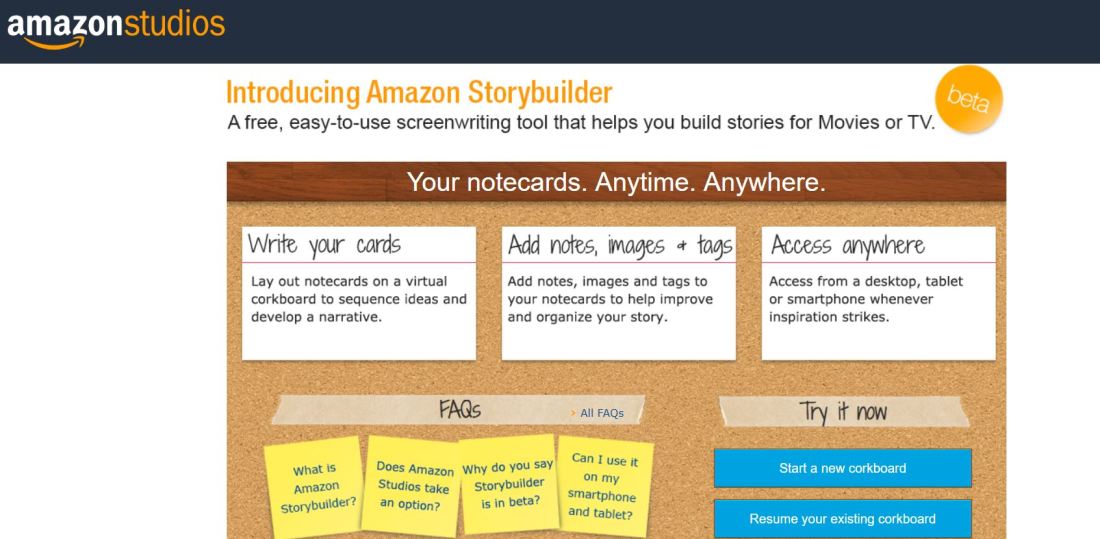
Amazon StoryBuilder is very much like a storyboard used in visual and digital arts prior to filming. It allows users to create a digital storyboard to map out ideas before filming. This would likely be used as Bloom’s synthesis level of learning, as it would require students to think about multiple resources to create a completely new storyline.
Creating an Amazon StoryBuilder would also be in the Active level of Dale’s Cone of Experience, especially assuming they would actually film their storyline.
 Gettin' Techy with IT